
Scam Alert: Here’s how scammers duped people
After sending money to the victim’s account using the UPI app, the fraudster says the transaction was done by mistake. The victim is then asked to contact the caller’s phone number and send money. If the user returns money through one of the UPI apps, the scammer will be able to access all the customer’s information, including bank information and KYC data like PAN and Aadhaar. With this information the fraudster can access the victim’s bank account and steal the money. The details of how the scam is being carried out are still unclear.
According to Delhi-based renowned cybercrime expert Pawan Duggal, this UPI scam combines malware phishing with human engineering. Therefore, current anti-virus software may not be sufficient to protect users of mobile payment applications from this online fraud. He also warns UPI users not to fall for such scams.
What did PhonePe say about the scam?
After the news was reported by several publications including Duggal’s comment, PhonePe issued a statement calling those articles ‘misleading’ as the reports suggested that users’ KYC details are shared during online transactions. The platform claimed that these stories are creating false concerns in the minds of Indian consumers who think that UPI is a secure method of money transfer.
NPCI statement on viral scam
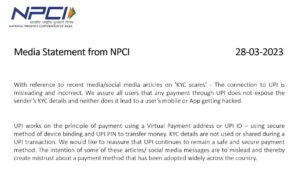
Meanwhile, NPCI also released a statement on the subject, assuring users that any payment made through UPI does not reveal the KYC details of the sender and result in the user’s mobile device or app being compromised. is not done. According to NPCI, UPI works under the principle that payments are made using a virtual payment address or UPI ID, a secure device binding technology and a UPI PIN. UPI transactions do not involve the use or sharing of KYC information.
If you receive money from an unknown number, the best way to deal with it is to settle in the nearest police station or approach the bank.


